He may have a bit of mud to contend with, but have you seen his view? Only in Asturias…

And a gentle trot down the track brings him to the magnificent Playa de Cuevas del Mar. Lucky Cow.
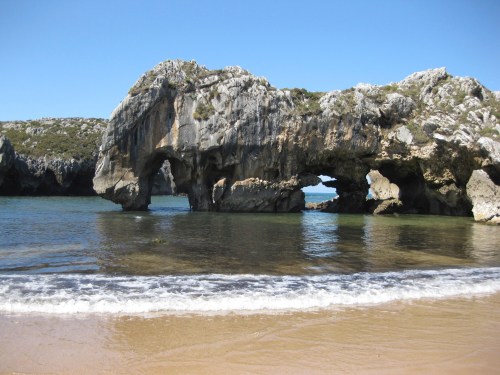
He may have a bit of mud to contend with, but have you seen his view? Only in Asturias…
And a gentle trot down the track brings him to the magnificent Playa de Cuevas del Mar. Lucky Cow.
http://www.flickr.com/apps/slideshow/show.swf?v=109615
From woodland near Arriondas… though almost any pathway in Asturias will turn up beautiful things like this at this time of year.

Check out Spain Expert and Pro-Photographer Mike Randolph’s excellent Spain site www.spainbymikerandolph.com


Lago Ercina, The Higher of the Covadonga Lakes.
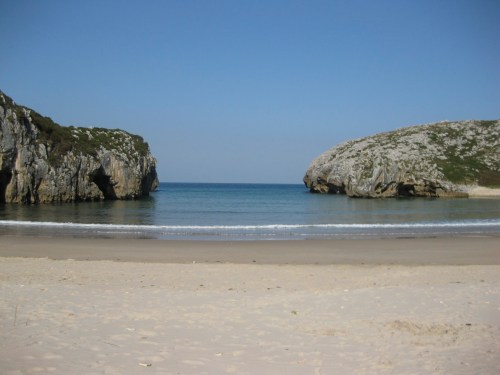
Playa de Cuevas del Mar (Map)
Asturias is still as green and majestic as ever (as if it would have changed!) Where else in the world can you leave such a stunning coastline and in under an hour be high up in mountains so impressive that they even look down on other slightly smaller mountain ranges below! Thank goodness it rains so much in Asturias, to keep it all so deep green, and to keep the developers at bay!
We stayed at the extremely nice, exceptionally friendly La Rondita. And it didn’t rain once!
It’s hot. 38º Celsius (100ºF) hot. No one can sleep hot.
It shouldn’t be a surprise, after all, this happens every year in Madrid, and every year I swear it’ll be my last summer living in the capital. Oh well, perhaps we’ll all get used to it in a week or two!
Luckily we’ve discovered the most perfect escape, just an hour and a bit from the city, high up in the Sierra de Guadarrama.
La Boca del Asno is a vast area of pine-covered mountainside, with a freezing, shallow mountain river, and a huge number of fellow picnicers. In fact, when I arrived at the already overflowing car park at midday last Saturday, my first thought was to run a mile – it seemed like the whole city had followed us up the hill! (N.B. Get there before midday if you want a spot in said carpark!)

But there is so much space, and as usual so many people stick close to the car park, that within a few minutes walk up the river, you find yourself with plenty of riverside space to sit down for a picnic and a long day’s paddling.
The trick is to cross over the river at the bridge below the bar, and keep heading up stream until you feel you have enough room between fellow picnicers to really relax.

It’s 8 degrees cooler than Madrid, (being about 800 meters higher), and if you wander up the hill away from the river, you really can escape humanity completely, lie back in the long grass under the pines, and contemplate the wonders of nature. Like this, for example – any ideas as to what it is, gratefully received:

To get to the Boca del Asno, drive up to Puerto de Navacerrada from Madrid, head over the top and down the hill towards San Ildefonso, wind down the 5 or 6 hair pins, then look for the big ‘Boca del Asno’ sign and car park:
Last weekend we headed about 5 hours south of Madrid to the stunning Sierra de Cazorla. If you don’t know where it is, then don’t worry – hardly anyone does! Which is a very good thing, as there is hardly anyone there at this time of year. Here is our trip in photos, with accompanying notes.
First we did the Cerrada del Utrero walk, an hour’s circular ramble, the highlight of which is this stunning waterfall pouring from a vast, sheer rock face as vultures circle above:

We spent the first night at the lost-in-the-hills Hotel Coto del Valle – 4 stars, a bit more luxurious than we need, but at 60 euros a night we felt it was a good place to start. (Later we moved to self-catering accommodation down the road in Arroyo Frio.) Just outside the hotel gates a large family of wild boar wandered past, watched by a stag further up the hill:

Our main excursion was a full days walk along the Sendero del Rio Borosa, a long dirt forest track beside a crystal clear, trout-filled mountain stream, than turns into the highlight of the trip, the narrow path known as the Cerrada de Elías, one of the most beautiful gorge walks I’ve ever encountered – filled with wild flowers and fig trees overhanging the stream:
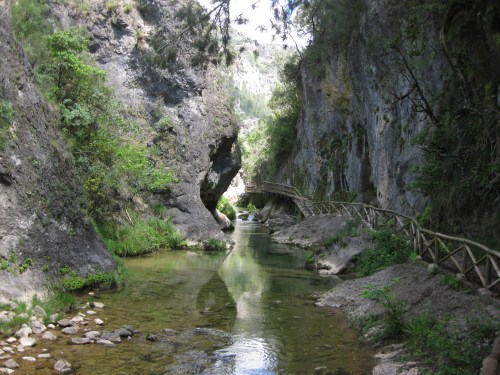
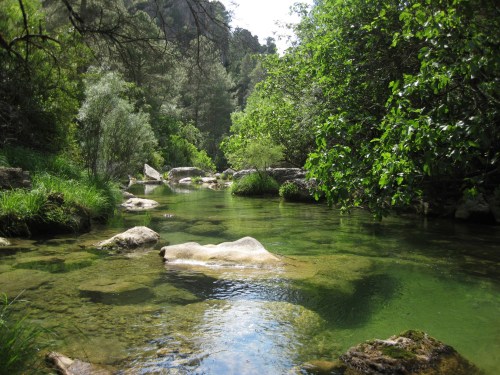
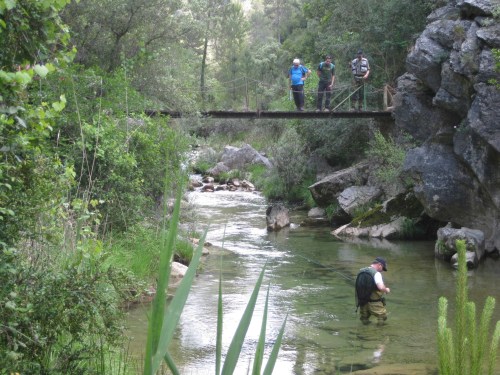
Here’s the map, below, of where to find the Sierra de Cazorla, and here are instructions for the Cerrada de Elías route. I hope you get to walk it one day!

Ben and Marina are back, talking about Sepulveda (photo above), the Hoces Del Rio Duratón, life in the Barrio and more…. Leave us a comment if you’ve listened, or have a question or topic for the next podcast.
More photos… A typical Castilla y Leon roadside landscape:

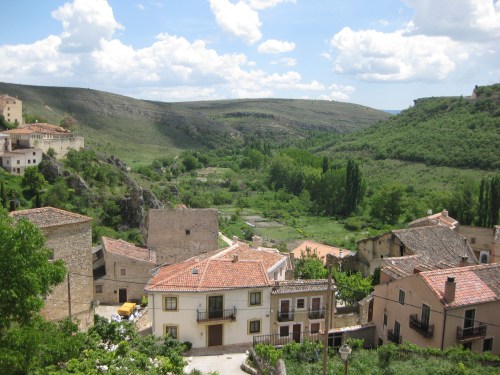
A view over the valley below Sepulveda town:
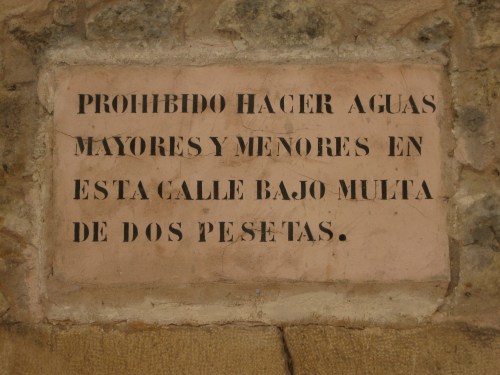
Amusing sign on the wall in Sepulveda:
Where to find Sepulveda:

Photo: Cabo de Trafalgar, near Vejer de la Frontera
Two very interesting articles in the Guardian have recently been pointed out to me by listeners at our Spanish learning sister site Notesinspanish.com
First, A short history of Spanish cinema – loads of trailers.
Do read the Guardian comments too for more recommendations. (As the first comment points out, you might need a 3 hour lunch-break to watch all the trailers in the article!)
Secondly, Spain’s lost generation of graduates join wave of migrants in search of jobs tells the story of those fleeing the crisis in Spain to seek work in locations like London.
Finally, a quick plug…
…a very good friend of mine has put a website together to help his mother (also a great friend of mine!) rent her very nice house in Vejer de la Frontera. Even if you don’t want to rent a holiday house in Vejer, then I thoroughly recommend looking at the photos in the galleries, they are great! This is without doubt one of my favourite parts of Spain. Check it all out here: A house in Vejer
Casteller from Mike Randolph on Vimeo.
In the city of Tarragona, Spain, castellers gather every two years to see who can build the highest, most intricate human castles. It requires astonishing strength, finesse, and balance. Not to mention courage.
Thanks so much to Mike for sending me this video. I went to this event, the Concurs de Castells, about 10 years ago (and wrote about it in Errant), and have longed to go back since, it’s one of the most amazing things I’ve ever seen in my life. If you want to go in two years time, get a ticket as soon as they are released, they fly!
 Notes from Spain by Ben Curtis